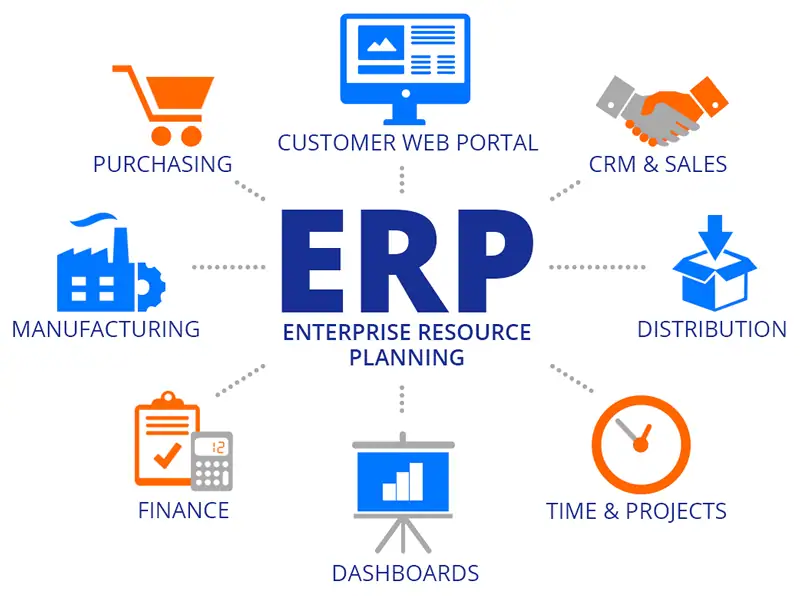
ERP is no longer a luxury solution for large businesses. With the strong trend of digital transformation in Vietnam, small and medium-sized enterprises (SMEs) are seeking to standardize processes, reduce operating costs, and increase productivity through ERP systems. However, a difficult problem arises right from the start:
Should you choose a custom-built ERP system or use a pre-built ERP platform available on the market?
Each option has its own advantages and disadvantages, and understanding them will help businesses make more informed decisions for their stage of development.
1. Ready-made ERP – Suitable for businesses that want quick implementation and optimal cost.
Platforms like Odoo, Base, Viindoo, Fast… are designed with a set of features specifically for most SME models.
Outstanding advantages
- Rapid deployment, it doesn't take much time to prepare the process.
- Cost savings, Suitable for new businesses or those controlling their budget.
- The feature set includes CRM, sales, inventory, accounting, human resources, etc. very complete to operate.
- It has a rich support ecosystem, documentation, community, and implementers.
Limitations to consider
- Customization limits, especially for businesses with unique processes.
- Some platforms charge per user or module → Costs increase over time..
- I do not own the source code; it is subject to the vendor's policy.
Suitable for businesses
- Newly established or operating on a small scale.
- The process is simple and has few variations.
- We need a quick, low-cost solution.
→ The ideal choice if the goal is quick startup and cost optimization.
2. New ERP system development – Completely proactive, optimized according to actual processes.
As businesses expand, workflows become more complex or specialized, and on-premise ERP systems often become insufficiently flexible. At this point, Build a new ERP system according to requirements. It has become a strategic choice.
Outstanding advantages
- The process is Design 100% based on actual operation, not "forced" into a system.
- Flexible expansion to accommodate new departments and business models.
- Multi-platform integration: website, CRM, POS, app; fast and accurate data synchronization.
- Own the source code, proactively adopt technology and reduce dependence on suppliers.
Limit
- The implementation time is longer (2–6 months).
- The initial investment cost is higher.
- A capable partner or technical team is needed for maintenance.
Suitable for
- The business is experiencing strong growth.
- Complex or industry-specific processes
- Long-term expansion goals
- Desire to own a strategic system
→ This is a long-term investment that helps businesses optimize their operations in a deep and sustainable way.
3. Quick comparison between the two options
| Criteria | ERP is available. | New ERP system development |
|---|---|---|
| Cost | Low | Higher |
| Implementation timeline | Fast | Medium - long |
| Customize | Limit | Unlimited |
| Own the source code | Are not | Have |
| Scalability | Fit | Very high |
| Fit | New SMEs and simplified processes | SME growth & specific processes |
4. Which direction should small businesses choose?
There is no "best" option, only choices. most suitable with the stage the business is currently in:
- If you need A quick, simple, and cost-effective solution. → ERP available That's enough.
- If you want Deep optimization – flexibility – proactive technology → ERP new construction It is a strategic choice.
Cách tốt nhất là đánh giá: mô hình kinh doanh, độ phức tạp của quy trình, ngân sách và mục tiêu 1–3 năm tới. Doanh nghiệp có thể tham khảo bài viết này để hiểu hơn về hệ thống ERP và các phương án tối ưu.
Contact us today to let EZ Fast Tech help your business Become more professional in the digital age!
- Website: https://ezfasttech.com
- Hotline: 0768945786
- E-mail: [email protected]
- Facebook: https://www.facebook.com/ezfasttech