
China's efforts to replace foreign technology are now focused on removing American chip manufacturers from its telecommunications system, according to sources. WSJ, Earlier this year, officials from China's Ministry of Industry and Information Technology instructed the largest network operators to remove foreign-made processors that play a core role in their networks by 2027.
The deadline was set to accelerate efforts to stop the use of such core chips in the country's telecommunications infrastructure. The regulator ordered state-owned mobile operators to examine the prevalence of foreign semiconductors in their networks and draft timelines for their replacement.
In the past, efforts to weed out foreign semiconductors in the telecommunications industry were hampered by the underdeveloped domestic chip manufacturing sector. Currently, carriers are increasingly sourcing domestic products, partly because quality has improved and performance has become more stable.
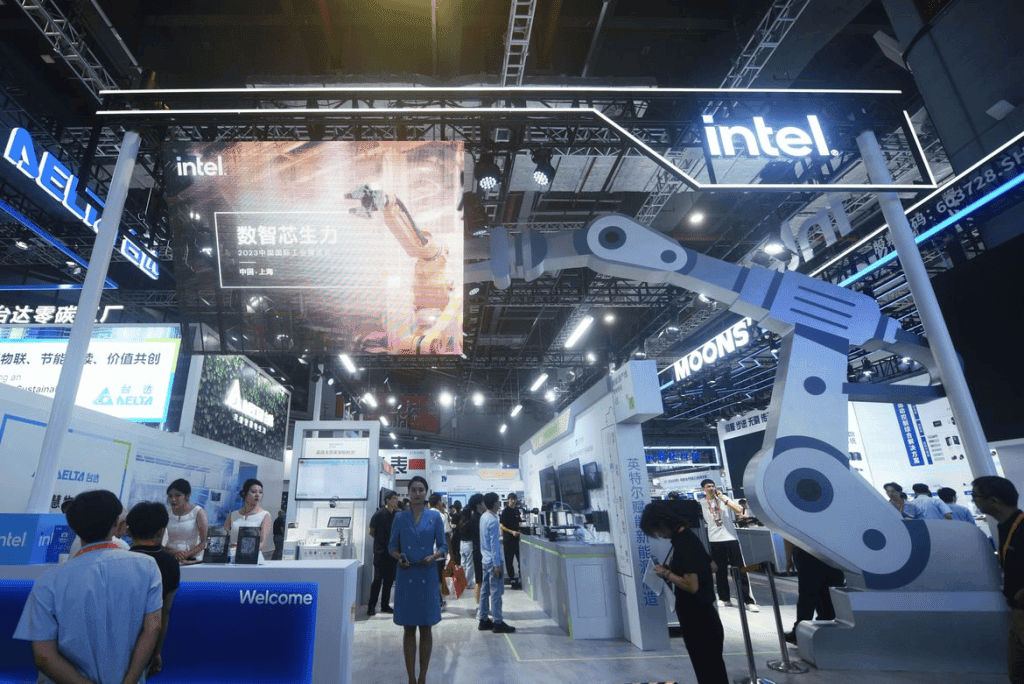
AMD and Intel – the two major American chip manufacturers – will be most severely affected. In recent years, they have supplied the majority of core processors used in networking equipment in China and around the world.
The US-China technology war is dividing the global semiconductor, networking, and internet markets. The US has banned Chinese telecommunications equipment due to national security concerns and prohibited chip companies like AMD and Nvidia from selling high-end AI chips to the Asian nation.
For years, the Chinese government has been progressively pushing to remove foreign suppliers from critical supply chains, from grain to semiconductors. China has also published procurement guidelines discouraging government agencies and state-owned companies from purchasing laptops and desktops containing Intel and AMD chips. According to the guidelines published in March, organizations have eight CPU options, with AMD and Intel ranking last, behind six domestically produced CPUs.
Computers using Chinese chips are pre-approved for state buyers. Products equipped with Intel and AMD chips require security assessments by a government agency. Manufacturing chips for PCs is a significant source of revenue for both companies.
China Mobile and China Telecom are also major customers of both companies in China, purchasing thousands of servers for their data centers. These servers are also crucial to telecommunications equipment and are often considered the "brain" of the network.
According to data from the research firm. TrendForce, Intel and AMD hold a large market share in the server CPU market. By 2024, Intel is estimated to hold 71% market share, while AMD will have 23%.
China's localization policies could reduce sales for Intel and AMD in the country. China is Intel's largest market, accounting for 271% of the company's revenue in 2023, according to Intel's latest annual report in January. The U.S. is its second-largest market. Intel's customers also include global electronics manufacturers that produce in China.
In the report, Intel highlighted the geopolitical risks it faces from escalating US-China tensions and China's localization efforts.. "We may face increasing competition due to China's programs aimed at boosting its domestic semiconductor industry and supply chain,", The report stated.
China contributed 151 TP3T of AMD's revenue last year, according to the company's annual report. This figure has decreased from 221 TP3T in 2022 after AMD faced restrictions from the US government on selling high-end AI chips to China.
Local CPU products replacing foreign CPUs have made significant strides in recent years, with companies like Huawei's HiSilicon and Hygon Information Technology, as well as institutions including the National University of Defense Technology, gaining a foothold.
Chinese chips aren't always highly regarded, but they're gradually winning over Chinese telecommunications customers. When China Telecom purchased around 4,000 AI servers in October 2023, the 53% was powered by Intel CPUs. The rest used Huawei's Kunpeng processors, according to a tender document.
(According to WSJ)
Contact EZ Fast Tech today for a free consultation on website services and software solutions:
- Website: https://ezfasttech.com
- Hotline: 0772869820
- E-mail: [email protected]